
Remembering Our Past
In 1942, the US government removed over 125,000 people of Japanese descent from the western US and incarcerated them, without due process, in concentration camps located in remote areas.
One of the camps, the Tule Lake War Relocation Center, lies in our diocese and has unique significance as a maximum-security site operated under crowded and stressful conditions. However, relatively few people are aware of its historical significance.
The Episcopal Diocese of Northern California created a multifaceted program to address this gap, with several articles about the camp at Tule Lake published in a diocesan newsletter, a workshop with both an in-person and live-streamed component, and a pilgrimage to the site.
The camp at Tule Lake has a complex and troubled history. Initially called the Tule Lake War Relocation Center by the federal government, it initially imprisoned people of Japanese descent from parts of Northern California, Oregon, and Washington. It later became the destination for those considered disloyal to the US, with its name changed to the Tule Lake Segregation Center. However, both names can be considered euphemisms for its identity as a concentration camp
Northern California Time of Remembrance
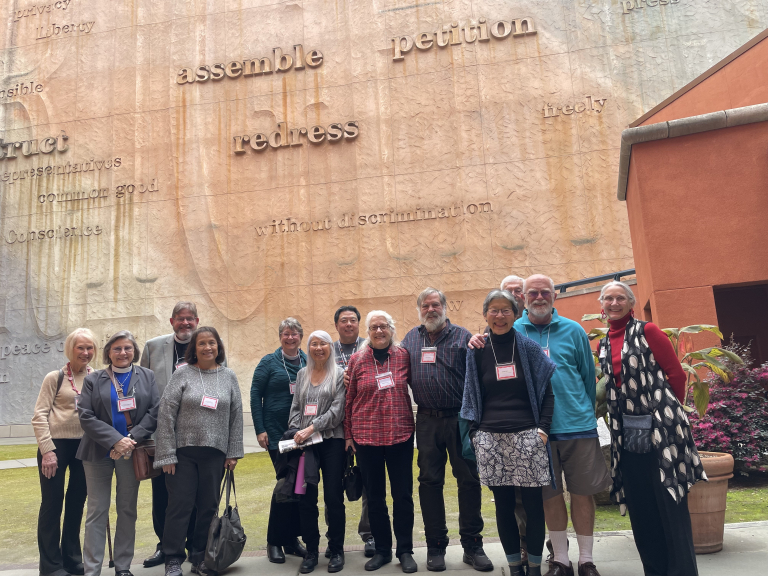
Every year on February 19, we commemorate Executive Act 9066, which required the incarceration of anyone with “one drop” of Japanese blood living on the West Coast.
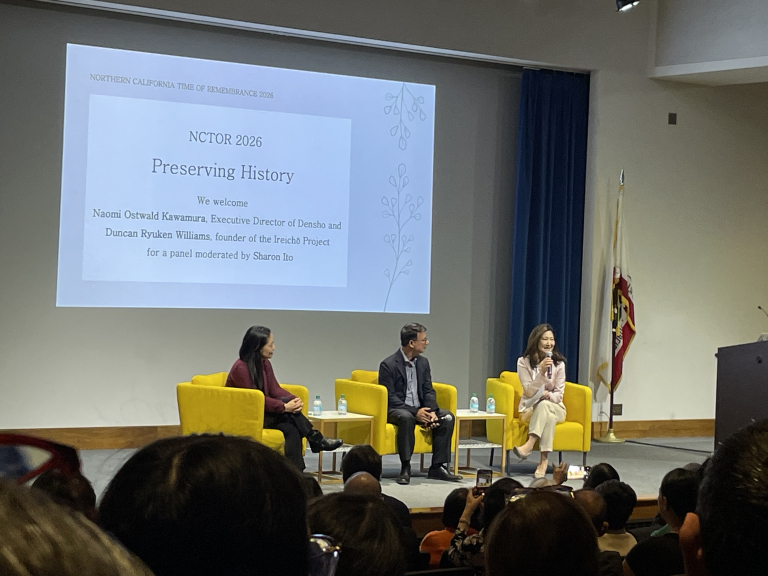
To reflect on this, a sellout crowd gathered on Saturday, February 14, 2026 at the Sacramento’s California Museum for the Northern California Time of Remembrance (NCTOR). A dozen members of our diocese were among the several hundred gathered to hear from two scholars on their work related to the incarceration of people of Japanese heritage during WWII.
Naomi Oswald Kawamura directs a Seattle-based nonprofit called Densho (www.densho.org) that holds a vast digital archive which “preserves and shares the history of Japanese American wartime incarceration to promote equity and justice today.” She spoke passionately about the importance of helping people be seen and heard, so that the suffering of Japanese Americans is never visited on another group of our citizens.
Duncan Ryuken Williams, a USC-based professor of religion and Buddhist priest, spoke of his great work of love, the Irechō Project — a huge book of over 125,000 names of those of Japanese ancestry incarcerated during WWII.
The book is currently traveling the U.S. and at each stop survivors, family members, and loved ones make appointments to see the book, find the names of family and friends, and place a stamp mark, in essence, witnessing to that person. The hope is that eventually every name will have a witness.
It was a beautiful, powerful gathering. The Ireicho book is at the California Museum this week.
A permanent exhibit there, “Uprooted” tells the story of Japanese and Japanese American incarceration.
The California Museum is in downtown Sacramento and is open Tuesday – Sunday.
The Commission on Intercultural Ministries has created a beautiful page on our website about the history of Japanese Incarceration here. You can find that here.
Pilgrimage to Tule Lake
In September 2025, members of the diocese took a pilgrimage to Tule Lake National Monument. This significant camp, one of ten concentration camps in the state of California at the time, is located in the northern part of our diocese.
Tule Lake National Monument commemorates the Tule Lake War Relocation Center / Segregation Center, where almost 27,000 Japanese Americans were incarcerated from 27 May 1942 until 20 March 1946.
By the fall of 1942, the population reached over 15,000 – about the same as present-day Ukiah – confined to an area of 1.5 square miles.
Later, Tule Lake became a maximum-security Segregation Center for those thought to be “disloyal”. In spite of its unique history, it remains unfamiliar to many outside the Japanese American community.
Read about the pilgrimage from Episcopal News Service.
Below is a video sharing the experience.We are so grateful for those that were willing to share their stories.
DISCLAIMER: the opinions expressed in this video are solely those of the presenters and not of the Episcopal Diocese of Northern California
Workshop Series
The Tule Lake Concentration Camp: Reflections and Lessons is a series of leaders, some connected directly to the concentration camp.
Learn from the speakers as they present their stories at St. John’s Episcopal Church in Roseville.